Back to overview
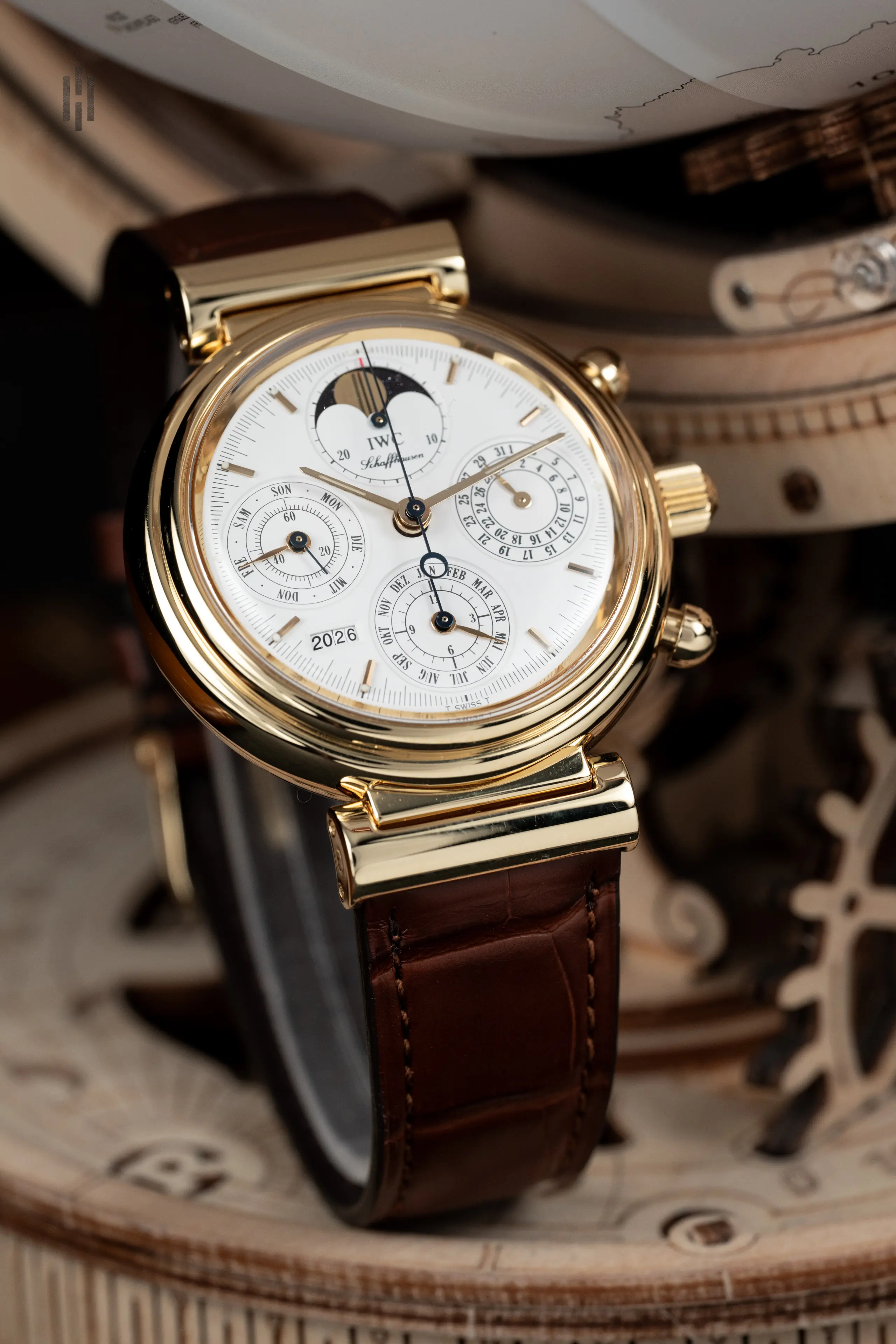
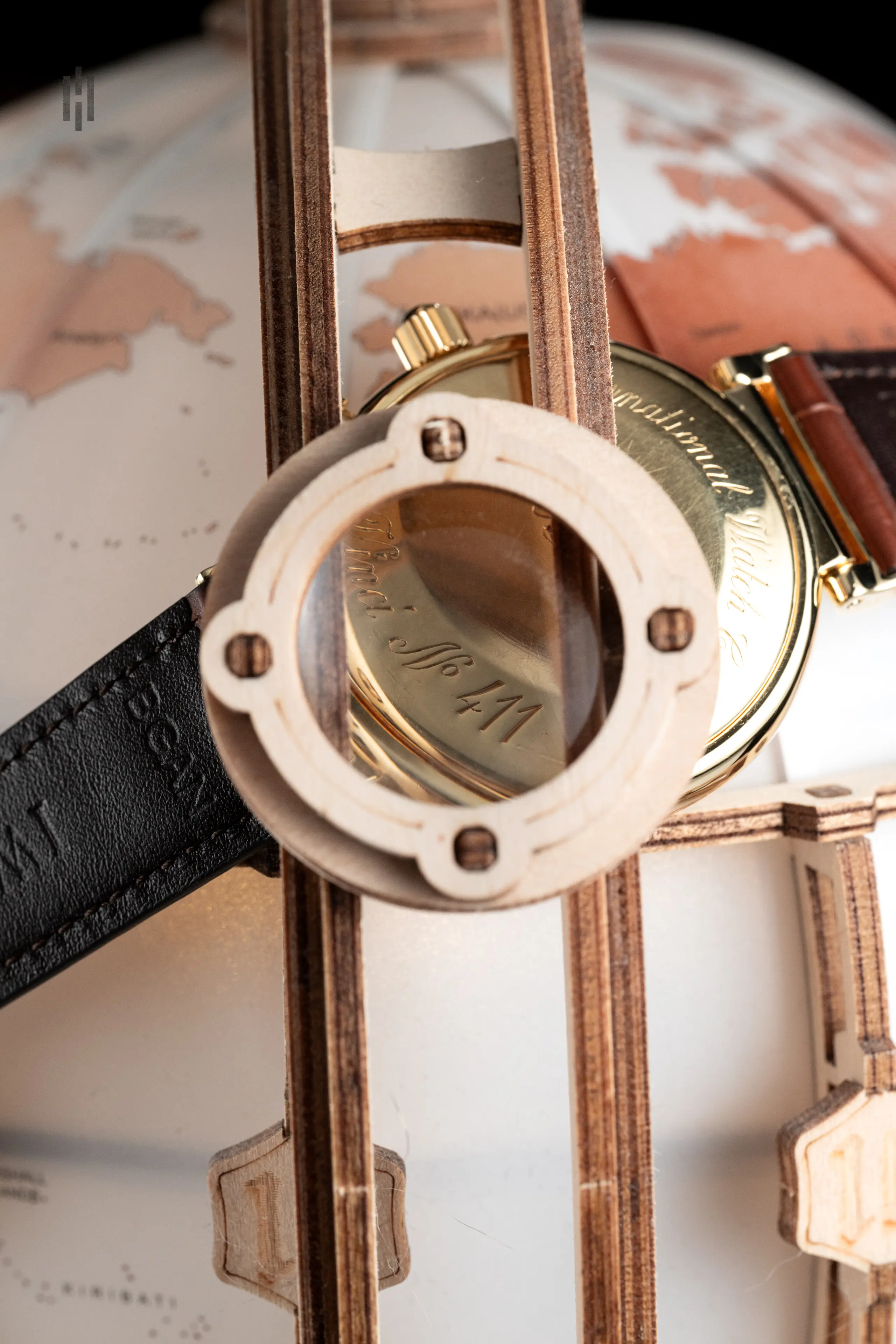
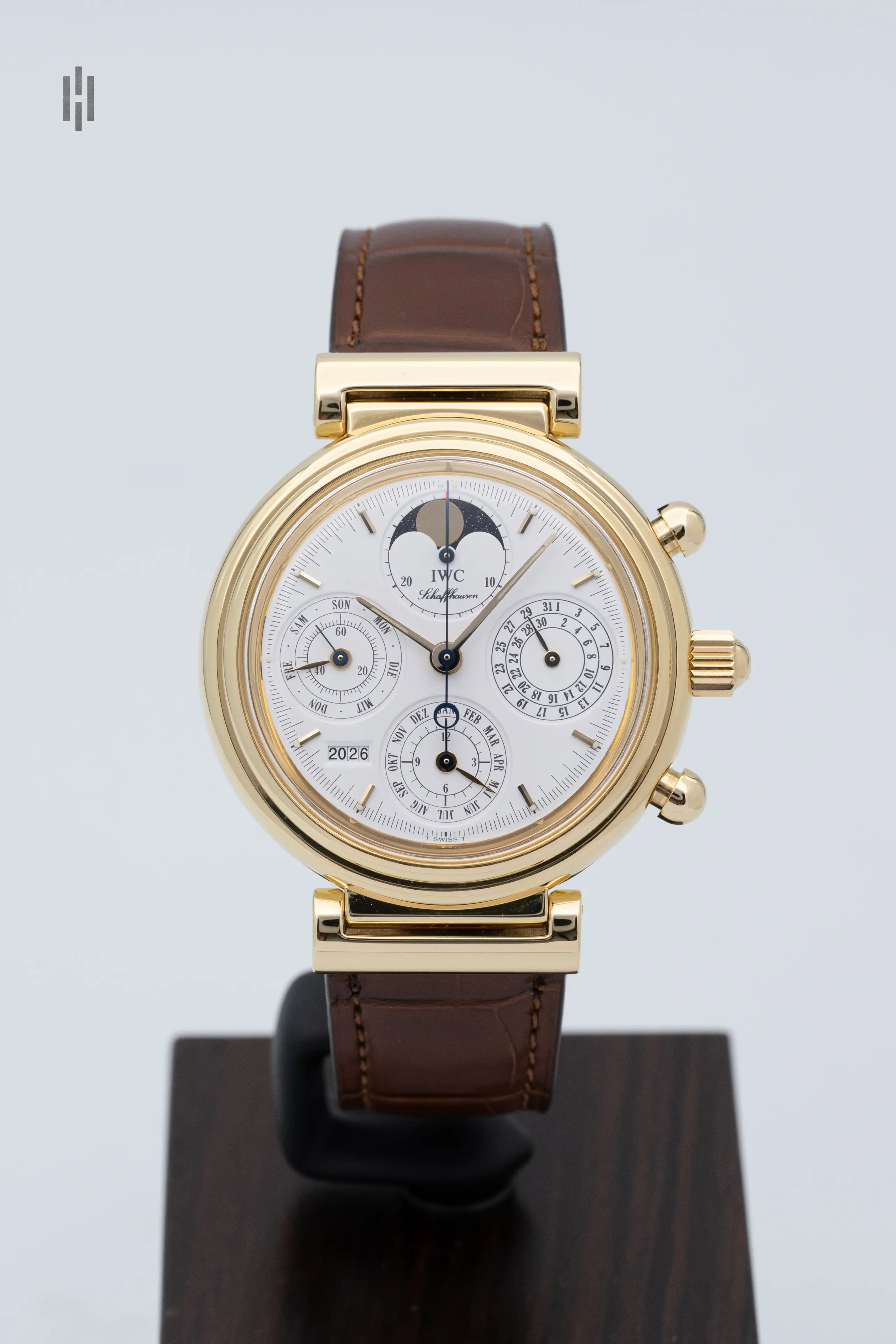
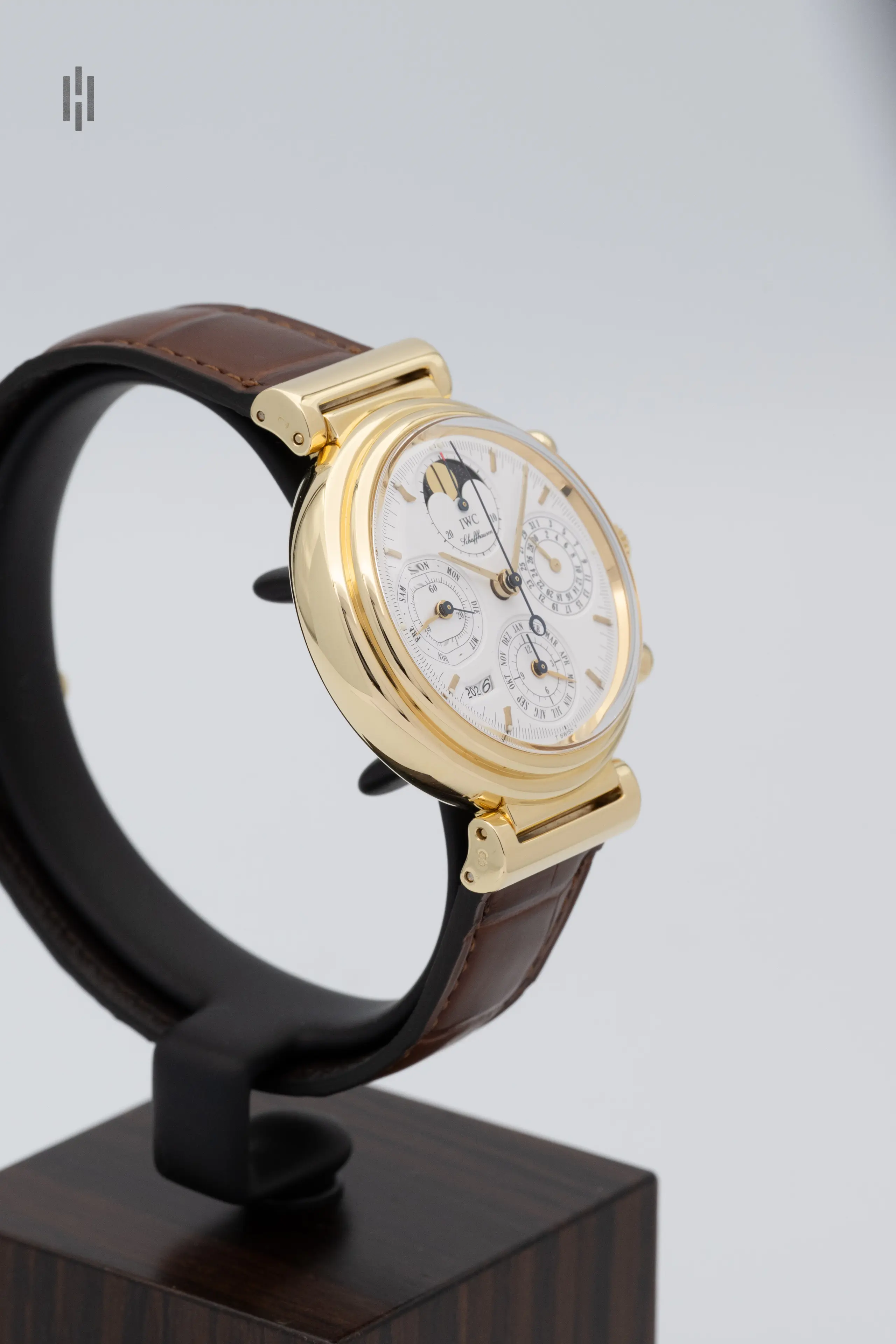
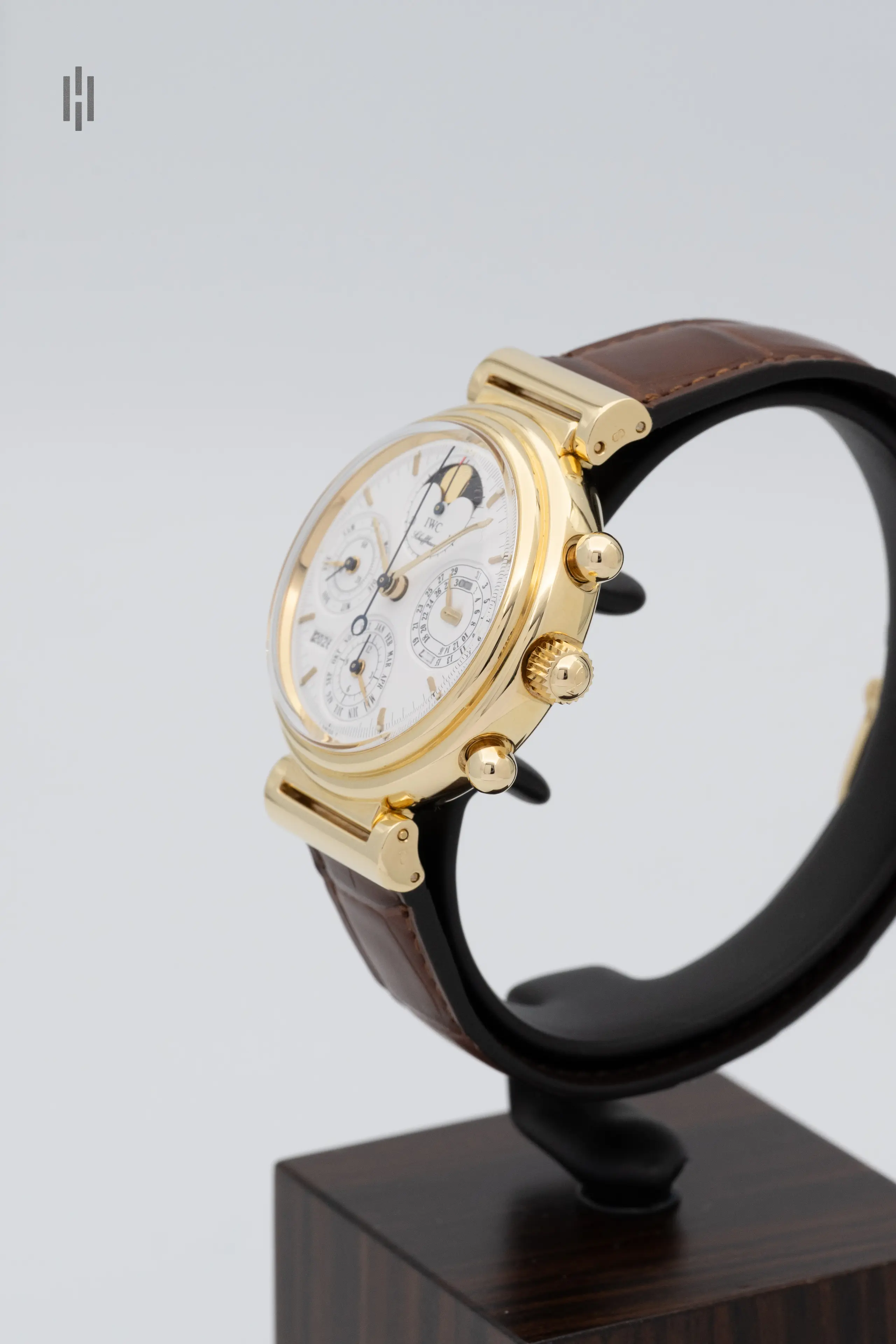
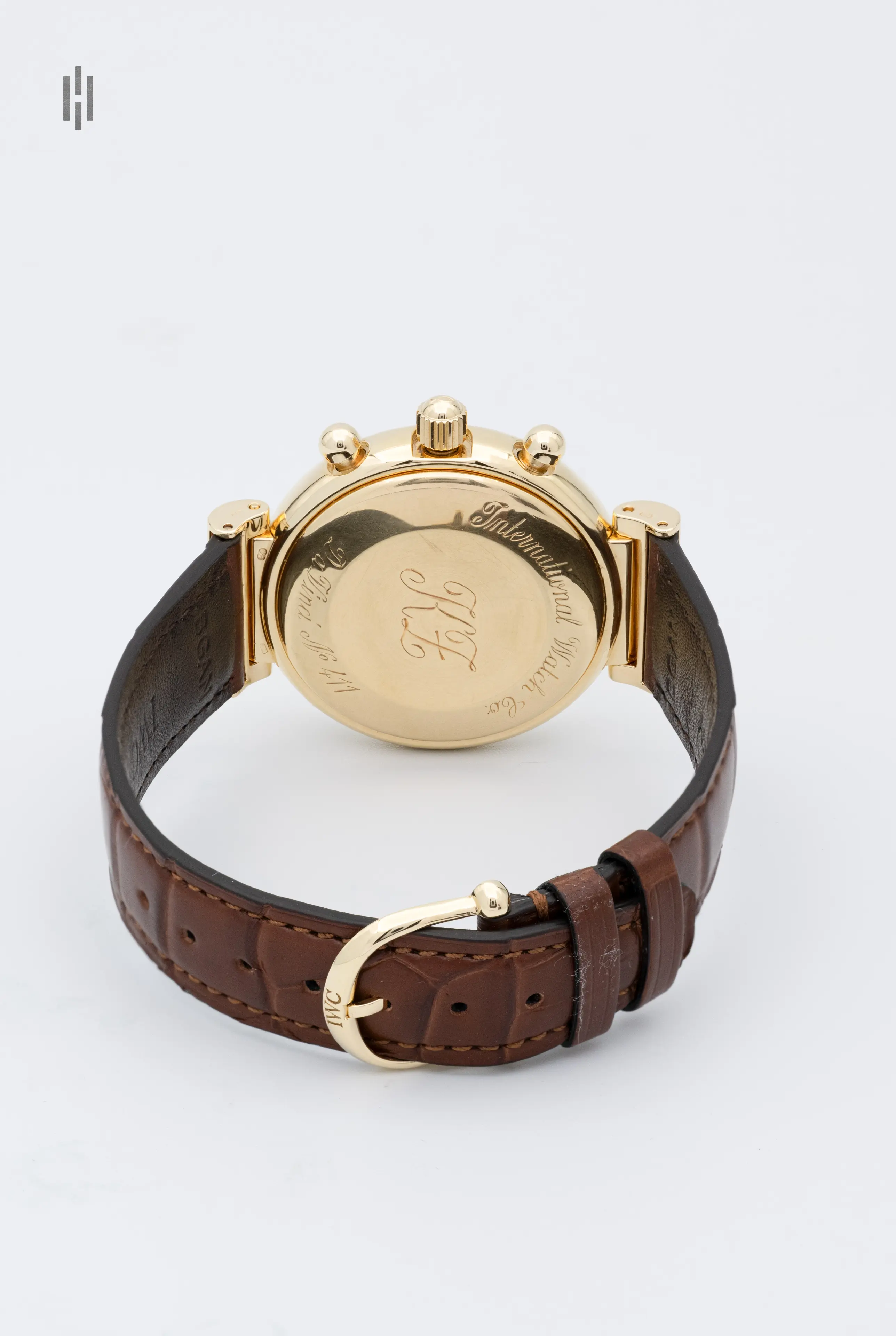
When IWC introduced the Da Vinci in 1985, it held perhaps the most elegant answer to the quartz crisis: a fully mechanical perpetual calendar, conceived by Kurt Klaus. A movement that knows the leap years, tracks the moon phase to within a single day over 122 years, and carries the date forward all the way to 2499 – and one that, against all expectation, can be set entirely from the crown. The four-digit year display was a small marvel at the time, and remains this watch's signature to this day. The round 18-carat yellow-gold case (39 mm), with its distinctively curved lugs, frames a white dial with applied gold hour markers. Beneath it runs the automatic calibre 79061 – chronograph, day, month, moon phase and year set in quiet order around the dial. The movement was serviced by the manufacturer in April 2026 and runs reliably as a result.


When IWC introduced the Da Vinci in 1985, it held perhaps the most elegant answer to the quartz crisis: a fully mechanical perpetual calendar, conceived by Kurt Klaus. A movement that knows the leap years, tracks the moon phase to within a single day over 122 years, and carries the date forward all the way to 2499 – and one that, against all expectation, can be set entirely from the crown. The four-digit year display was a small marvel at the time, and remains this watch's signature to this day. The round 18-carat yellow-gold case (39 mm), with its distinctively curved lugs, frames a white dial with applied gold hour markers. Beneath it runs the automatic calibre 79061 – chronograph, day, month, moon phase and year set in quiet order around the dial. The movement was serviced by the manufacturer in April 2026 and runs reliably as a result.
 CONTACT US NOW
 Schreiben Sie uns eine
 Rufen Sie uns an